Tag Archives: positive change

Confirmation Bias: Why We Usually See What We Expect to See

Episode 3 of the Building Bridges Series
3-minute read


Have you ever wondered why two people can look at exactly the same information and come to completely different conclusions? Or why some people seem immune to facts that contradict what they already believe?

There’s a good chance that this is a result of a fundamental feature of the way our brains operate: Confirmation Bias. When it comes absorbing new information, you can think of this as a sometimes helpful but often troublesome gatekeeper.

What Is Confirmation Bias?

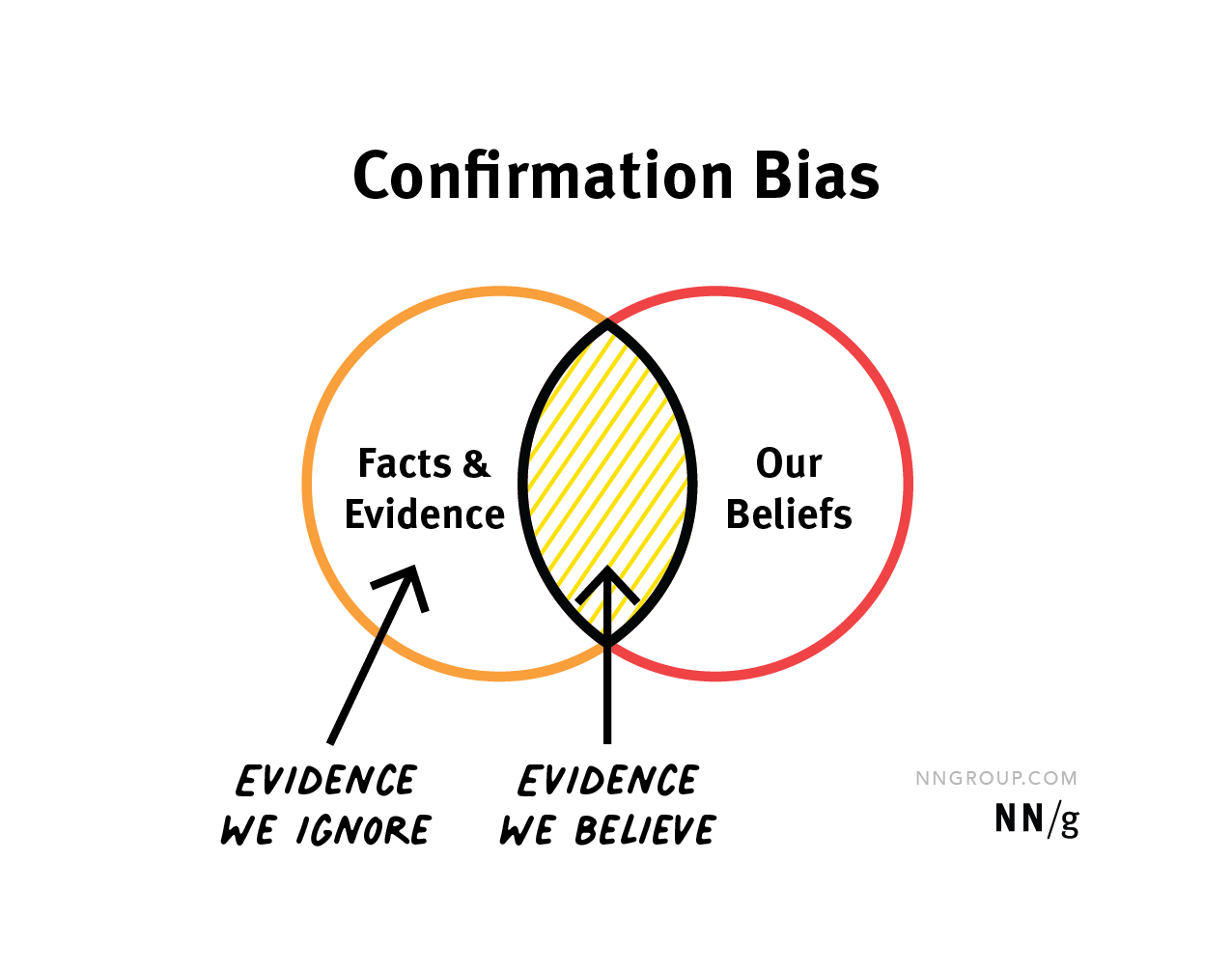
Confirmation bias is our natural tendency to notice, seek out, and remember information that supports what we already believe, while ignoring or dismissing information that contradicts those beliefs.

It’s like wearing glasses that filter reality, allowing you to see only what matches your existing worldview. The problem? We don’t realize we’re wearing these glasses. We believe we’re seeing the full, objective picture.

Your Brain’s Filter System

Your brain processes millions of bits of information every second, but you’re only consciously aware of a tiny fraction of it. To avoid getting overwhelmed, your brain uses shortcuts to decide what deserves your attention.

One of these shortcuts is to prioritize information that confirms your existing beliefs, since that’s much faster and requires a lot less energy. This happens in three key ways:

  1. Selective attention: You naturally notice things that support your beliefs and overlook things that don’t.
  2. Biased interpretation: When faced with ambiguous information, you interpret it in ways that support your existing views.
  3. Selective memory: You remember evidence that confirms your beliefs better than evidence that challenges them.

This isn’t something only “other people” do. We ALL do it, regardless of education level, intelligence, or political leaning.

The “That’s Interesting” vs. “That’s Wrong” Test
Here’s a simple way to spot confirmation bias in action: Pay attention to your immediate reaction when you encounter new information.

If the information seems to support your existing beliefs, you likely think, “That’s interesting!” or “I knew it!” You accept it easily, without much scrutiny.

If the information contradicts your beliefs, your first thought is probably closer to, “That’s wrong!” or “That can’t be right.” You immediately look for flaws or reasons to dismiss it, which often includes questioning the credibility of the information source.

The stronger your reaction, the more your confirmation machine is probably at work.

Why It’s So Hard to Overcome

Our confirmation machine isn’t just a minor glitch—it’s a powerful force that shapes how we see the world. And there are several reasons it’s so difficult to overcome:

  1. It operates largely unconsciously. We don’t realize we’re filtering information.
  2. It feels good to have our beliefs confirmed. Being right gives us a small dopamine reward.
  3. Challenging our beliefs can feel threatening, triggering our brain’s defense mechanisms.
  4. We’re surrounded by people who often share and reinforce our biases.
  5. If you engage in social media, powerful algorithms are restricting what you’ll see to content that you’ve already shown an interest in.

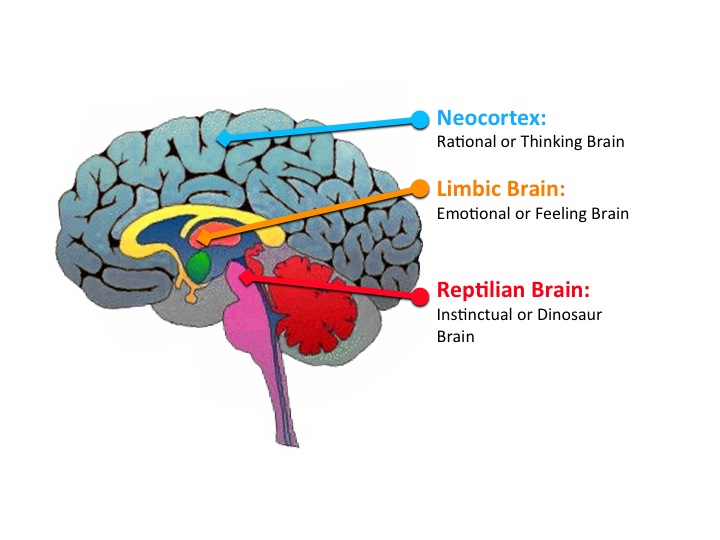
Remember when I mentioned in my post about our two brains that the Lizard Brain plays a leading role in our decision-making? Well, confirmation bias is one of its favorite tools.

Why This Matters

Confirmation bias isn’t just an interesting psychological quirk—it’s a key reason we’re so divided on important issues. When we only see evidence that supports our existing beliefs, we drift further apart instead of finding common ground.

Understanding confirmation bias doesn’t mean you’ll suddenly be free from it. But awareness is the first step. The next time you feel strongly about something, try asking yourself: “Am I seeing the full picture here, or is my confirmation machine filtering my view of reality?”

What do you think? Have you caught your confirmation machine in action recently? Which beliefs or stories might your brain be working to protect? You’re invited to add your thoughts below.

Up Next:
The Power (and The Dark Side) of Tribes


Meet Your Two Brains: The Wizard and The Lizard

Episode 1 of the Building Bridges To Common Ground Series
4-minute read


Like a lot of people, I used to think that we humans are basically rational creatures who occasionally get emotional. We tend to picture ourselves as generally making logical decisions after carefully weighing evidence and considering our options—although emotions may sometimes interfere with our otherwise sound judgment.

But what if it’s actually the other way around?

An extensive body of neuroscience shows that the vast majority of our decisions are driven mostly by emotional and instinctual responses, which we later justify with logical-sounding explanations. Understanding this fundamental truth about how our brains actually work can transform how we see ourselves and how we interact with others.

Your Two Competing Systems

You have two distinct thinking systems that often compete for attention and control: the Lizard Brain and the Wizard Brain.

The Lizard Brain: Your Default Operating System

Your Lizard Brain (also called the reptilian or “instinctual brain”) evolved over millions of years with one primary mission: Keep You Alive. It’s constantly scanning your environment for potential threats or rewards, automatically categorizing everything it encounters as:

Fight or flight
  • Safe or dangerous
  • Familiar or unfamiliar
  • Rewarding or threatening

This system operates on emotion and instinct. It’s lightning-fast and energy-efficient. When it detects a potential threat—whether a physical danger or a challenging idea—it triggers immediate defensive reactions.

The problem? Your Lizard Brain can’t tell the difference between a savage predator and an opposing political point of view. Both can trigger the exact same defensive “fight, flight or freeze” reaction in our bodies.

The Wizard Brain: Your Executive Override

Your Wizard Brain, centered in your prefrontal cortex, is a relatively recent evolutionary development. It’s responsible for rational thought, complex analysis, and self-control. It’s what allows you to question your initial reactions, consider multiple perspectives, and make nuanced decisions.

The Wizard Brain is impressive but has significant limitations: it’s relatively slow, requires substantial energy, and often gets overridden when emotions run high. Think of it as a powerful but resource-intensive program that your brain only runs when necessary.

A Surprising Imbalance

Research in cognitive psychology reveals that a substantial majority of our mental processing occurs automatically, outside our conscious awareness. While we’d like to believe our thoughtful analysis drives most of our decisions, studies suggest otherwise.

Our Lizard Brain operates continuously and effortlessly, generating impressions, intuitions, and emotional responses that significantly influence our choices. Meanwhile, our Wizard Brain requires deliberate activation and consumes considerable mental energy.

This imbalance explains why we often make decisions based on emotion and instinct first, then use logical thinking afterward to find supporting evidence that will justify our decisions. And it makes sense, since the Lizard Brain is located right at the top of the brain stem, where all of our sensory input flows into the brain to be processed. The very next stop after that is the emotional center of the brain. It’s not that rational thought plays no role—it’s that it frequently serves to explain and validate what our intuitive brain has already decided.

Think of a person who tells you that they have decided to buy a new car. They’re excited about it, but it’s likely that they will also give you a few reasons for why it’s actually a smart decision. Their old car is getting up there in mileage and the brakes are worn, so it’s probably going to need some expensive repairs soon. That can help make it feel like the new car won’t actually be much more expensive, right? Of course, this is almost never true, but their Wizard Brain is doing its best to help justify what they have already decided they want. This is what we call rationalization–and it happens after the emotional center of our brain has already made a choice. Our brains tend to argue for what we want to be true.

This doesn’t mean we’re hopelessly irrational. Rather, it suggests that understanding the relationship between our intuitive and analytical thinking systems is crucial for better decision-making.

Intelligence vs. Emotional Awareness

You might wonder: Doesn’t intelligence make a difference? Won’t “smarter” people be more likely to use their Wizard Brains?

Surprisingly, conventional intelligence (as measured by IQ or academic achievement) doesn’t necessarily correlate with better decision-making when our emotions are triggered. Studies have shown that highly intelligent people are just as susceptible to emotional reasoning as anyone else—and sometimes even more so, because they can be better at constructing elaborate justifications for their beliefs and developing attacks on other people’s positions.

What seems to matter more is emotional awareness—recognizing when your Lizard Brain has taken control and consciously engaging your Wizard Brain. This skill is closer to what we might call wisdom than intelligence, and it can be developed regardless of your IQ score.

Why This Matters for Bridging Divides

When someone disagrees with us, their position likely isn’t the result of faulty logic— it may be rooted in different emotional responses that their Wizard Brain has rationalized. And of course, we may be doing the same thing to them.

One more important point: Facts alone rarely change minds. This is because facts require your Wizard Brain to process them, but most of the time the Lizard Brain is actually in charge. This isn’t because people are stupid or irrational—it’s because they’re human.

Lizard Wizard

We need both the Lizard and the Wizard to function at our best. But it’s probably better when the Wizard rides the Lizard, rather than the other way around.

The next time you find yourself in an argument, ask yourself: “Which part of my brain is running my show right now? And what might be driving this other person’s responses?”

What do you think? Can recognizing our emotional foundations change how you’ll approach a disagreement? Have you noticed highly intelligent people (maybe even you) who sometimes get trapped in lizard-brain reactions? I’d love to hear your thoughts in the comments below.


Up Next: “Why Stories Beat Facts (almost every time)”


5 Ways Improv Tools can pump up your meeting or event

The Engaging Event Series, #6

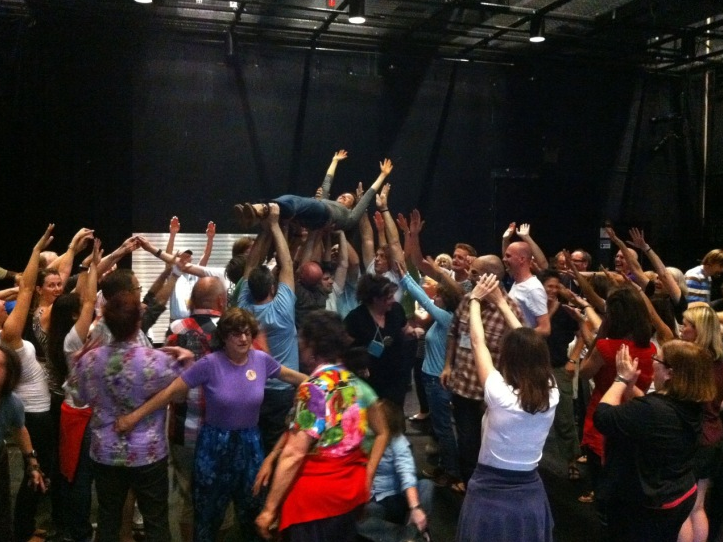
Much as we might like to control our day-to-day existence, the fact is that we live in an unscripted world, where we are constantly called upon to think on our feet–in other words, to improvise.  Most of us usually associate “improv” with comedy and theater.  Some have described it as “organized chaos” (not that different than life in general, when you think about it).  But it turns out that Basic Improv Techniques can provide us with opportunities to encourage bonding, collaboration, brainstorming and creative problem-solving–pretty common objectives whenever you get a group of people together.

This time around, I’m featuring a Guest Post by Jenise Fryatt, who’s one of my favorite bloggers about new ideas in event experience design. Among other things, Jenise creates content at Engage365 , Sound & Sight and EventProv.com.  In this post, Jenise shares a few things she learned about using improv while attending the 2011 Applied Improvisation Network Conference  in Baltimore last June.  In Jenise’s own words:


Here are 5 things I learned about how improv skills, games and concepts can enhance and even transform events and meetings.

1 – Help people connect and have fun
Be it a small group session or a large general session with hundreds of people, there are improv-inspired games that can get people smiling, connecting, bonding and having fun. Sometimes they were as simple as a game called Back to Back that helps people get to know each other in a fun, musical chairs way, or the Diamond Dance, in which participants stand up next to their (theater style) seats and mimic the dancing of the person in front of them.

2 – Teach communication skills for better learning, networking
Improvisors are EXPERT communicators who are trained to use much more than words in connecting with others. They learn these skills through games like Zip,Zap,Zop; Red Ball, One Word Story and much more. Nearly every game that improvisors use is an exercise in effective communication. Practicing such games at a conference is a fun way to teach skills that will not only help attendees get more out of your event, but will help them in the situations they return to at home.

3 – Create your presentation with your attendees
What if you became comfortable with taking your presentation in a different direction than you had planned. What if you actually co-created it with your attendees?

Time after time sessions at the AIN conference followed this non-structure. It wasn’t about the presenter imparting knowledge alone. The attendees played a great role in what direction it took. In fact, I often got the feeling that the presenter learned as much from the attendees as the attendees learned from the presenter.

Improvisors learn to be very PRESENT oriented and because of this, they are much more aware of learning opportunities and are quick to seize the moment. So what if the original plan gets dumped? As long as attendees are finding more value, it’s worth it.

4 – Work together to solve a problem
Crowd-sourcing is a great way to get information and it’s used widely on the internet through surveys and polls. But an event where you have them all in one room presents an opportunity for doing this that won’t take days or weeks. You can do a lot in under a 1/2 hour.

The AIN conference organizers wanted to use the group to help create better branding. During a session of nearly 30 people, they had individuals take turns sharing one word he or she felt defined AIN. The words were written on flip charts.

After each person had shared two words, the group was divided into smaller groups of 4 people each. Each smaller group choose 6 of the previously chosen words. Each group reported what their words were and a dot was placed by each word. Then the words with the most dots were chosen to be used in crafting a branding statement about AIN.

I was impressed by how well this quick process got to the heart of who the AIN attendees are and what they care about.

5 – Practice dealing with difficult situations
One of the general sessions employed a game (invented at the conference) for applied improvisors to address obstacles they face in selling their services. All 100 participants chose stations labeled either AIN or the name of one of our ideal clients, i.e. event planner, business schools, etc.

Each client group invented a persona and identified some of the obstacles they face. Then each person in a client group (of about 3 or 4) took turns facing off with an AIN member who was selling applied improvisation services.

It was very illuminating. Some of the insights gained included; how important it is to understand and use the terminology of potential clients; establishing a relaxed, friendly rapport is extremely helpful and practicing such conversations can really help to address issues ahead of time. The whole exercise took less than 1/2 hour.

Being around people who have in common a love of  “making stuff up”  was energizing and inspiring beyond words.  I hope to give you more of a feel of it in future posts.  But something that I think all of us AIN conference attendees also share, is the conviction that improv isn’t magic.  The tools that make us highly creative are tools that can be used successfully by anyone. AIN is an organization dedicated to spreading the word and I’m very proud to be associated with it.

(To view this post in its native habitat, follow this link to Eventprov.
Thanks, Jenise!
)

How have you used or seen improv techniques applied to your own event experiences?


For 10,000 Bonus Points:

  • For improv ideas, check out this laundry list of Improv Games (oddly enough, some of them double as drinking games…)
  • You might also be interested in this TED Talk by Stuart Brown, exploring the serious subject of Play: