Tag Archives: communication

The Invisible Lens: How Your Worldview Filters Everything You See

Episode 6 of the Building Bridges Series
3-minute read


Two people witness the same car accident. One sees reckless driving and demands stricter law enforcement. The other sees a tragic mistake and calls for better driver education. Same event, completely different conclusions.

Welcome to the power of worldview filters—the invisible lenses through which we see and interpret everything around us.

What Are Worldview Filters?

Think of your personal worldview as a pair of glasses you’ve been wearing so long that you’ve forgotten you have them on. These mental filters act as screens that determine:

  • Which information gets your attention
  • How you interpret what you see and hear
  • What you consider important or trivial
  • What seems obviously true or clearly false
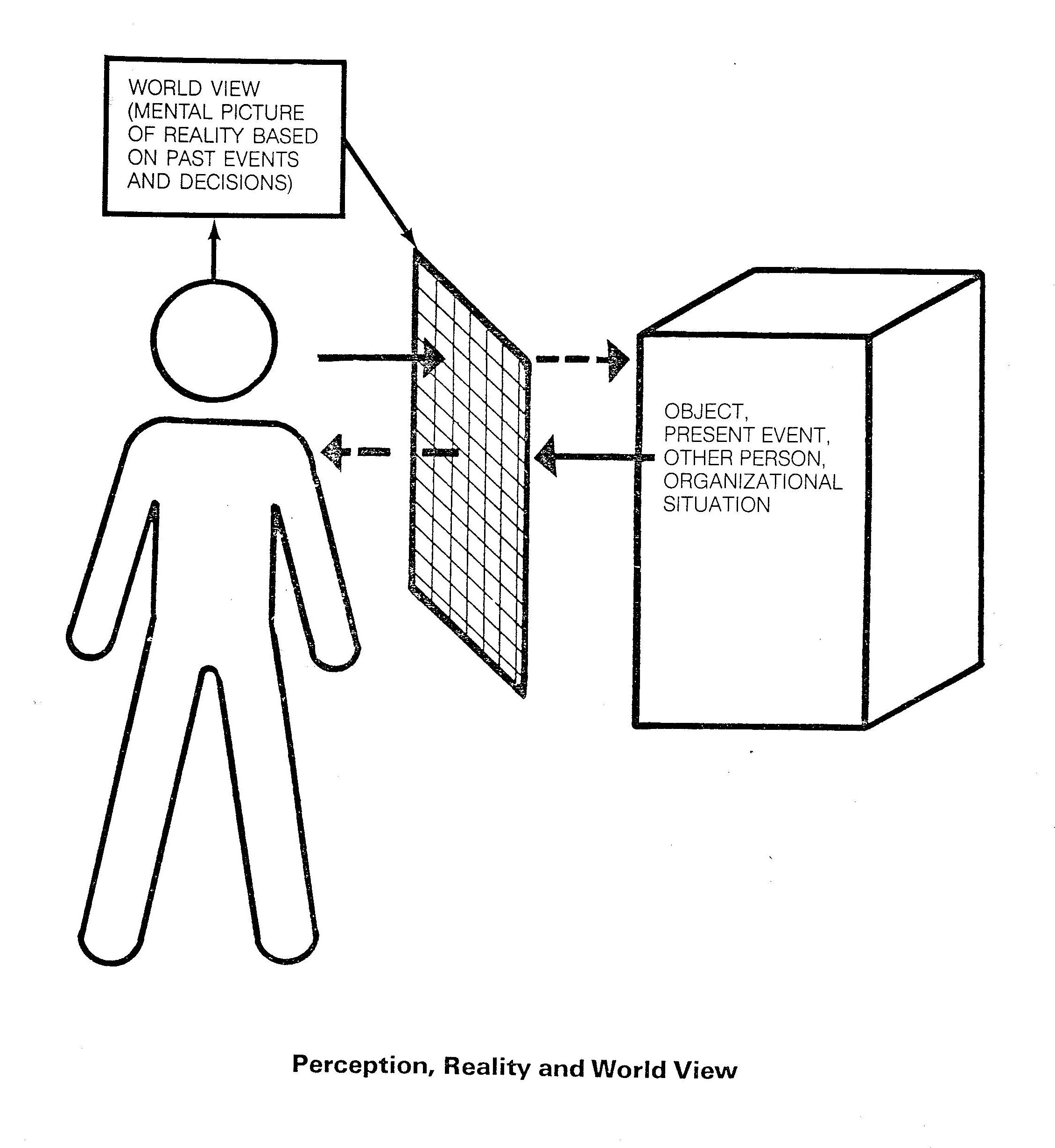
Your worldview isn’t just your opinion about specific topics—it’s the fundamental framework that shapes how you process all information and make sense of reality itself. As the diagram above shows, the same objective reality can pass through different people’s worldview filters and emerge as completely different perceptions—which explains why two people can witness the same event and come away with entirely different interpretations.

Where Do These Filters Come From?

Our worldviews don’t form randomly. They’re built from the unique combination of experiences that make up our lives:

Life Events: Significant experiences shape our understanding of how the world works. A person who grew up during the Great Depression might have very different views about financial security than someone who came of age during the dot-com boom, when 22-year-olds were becoming millionaires overnight.

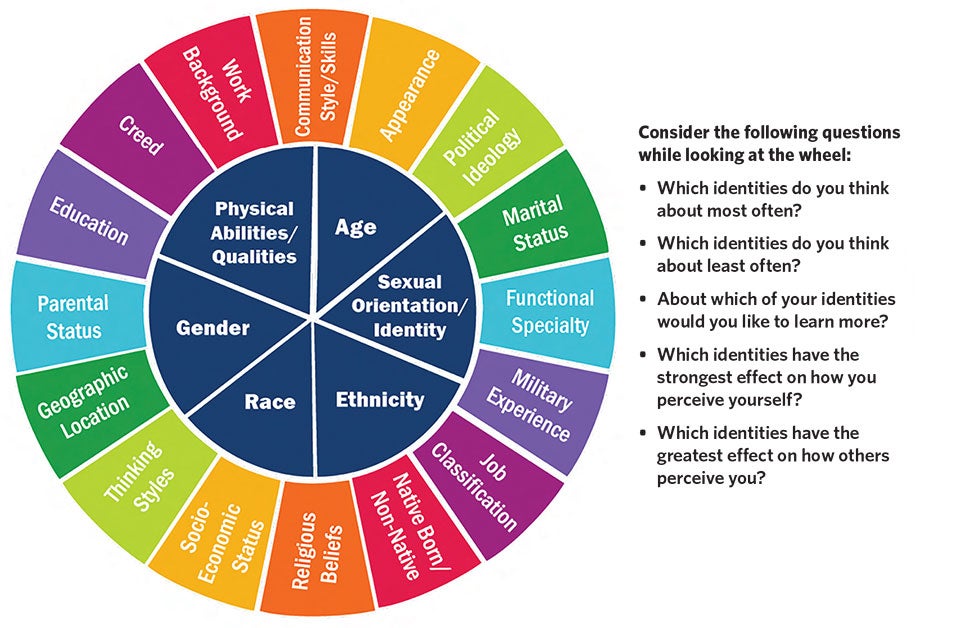
Cultural Environment: The stories, traditions, and values we absorb from our families and communities create deep patterns in our thinking, often operating below our conscious awareness. Religious and spiritual traditions are particularly influential, shaping our fundamental beliefs about human nature, morality, and life’s purpose in ways that affect how we interpret virtually every situation we encounter.

Social Circles and Information Sources: The people we spend time with and the media we consume reinforce certain ways of seeing the world while making others seem foreign or wrong. In our current information environment, algorithms for social media or search results often create echo chambers that reinforce our existing filters, rather than challenging them.
Source: https://pacasa.org/news/identity-wheel

These filters work hand-in-hand with our brain’s natural tendency toward confirmation bias. Our Lizard Brain, focused on quick survival responses, uses these filters to rapidly categorize new information as friend or foe, safe or dangerous—noticing information that supports our existing beliefs while dismissing contradictory evidence.

Why Understanding Worldview Filters Matters

Since none of us have had exactly the same combination of life experiences, we’re naturally going to end up seeing some things very differently. Recognizing worldview filters is crucial because everyone has them, but most people don’t realize it. We tend to think our way of seeing things is simply “how things are” rather than one possible perspective among many. These filters operate unconsciously and often lead to misunderstandings when people wearing different worldview glasses discuss the same topic—it’s almost like you’ve learned to speak different languages.

Seeing Your Own Lens

The goal isn’t to eliminate your worldview filters—that’s impossible. Instead, the aim is to become aware of them to help understand how they might be controlling your thinking.

Try asking yourself:

  • What major life experiences have shaped how I see the world?
  • When I have a strong emotional reaction to new information, what might that tell me about my filters?
  • How might someone with a completely different background interpret this same situation?

When you encounter someone who clearly sees the world differently than you do, try approaching them with genuine curiosity rather than judgment. Ask questions to help understand their perspective—not to prove them wrong, but to learn how their experiences shaped their worldview. This curiosity can lead to a much deeper understanding than arguing ever could. And that can make space for exchanging ideas.

The most profound conversations often happen when people recognize that they’re looking at the same reality through different lenses, rather than assuming one person is simply right and the other wrong. Next time you find yourself thinking “how can they not see the truth?”, remember: they might be wearing different worldview glasses than you are.

Which personal experiences do you think have most shaped your own worldview? Have you ever had a moment when you realized you were seeing something through a particular filter or bias? Are there some worldviews that are “right” and others that are “wrong”? Feel free to add your thoughts below.


Up Next: “Moral Foundations: Our Beliefs About How Things Are Supposed To Work”


6 Expectations to Abandon Before Your Next Difficult Conversation

Episode 5 of the Building Bridges Series
4-minute read


Have you ever been part of a conversation about a difficult topic—politics, religion, parenting approaches, etc.—and watched it quickly spiral into frustration or outright conflict? My guess is that your answer is a resounding yes.

What if I suggested that many of these conversations go sideways not because of what was said, but because of the expectations we had going into them?

The reality is, having a successful conversation where there’s likely to be disagreement (without it becoming stressful or heated) may require you to let go of certain common expectations before you even get started. I got this idea from my experiences with the Braver Angels organization, whose purpose is no less than to  restore the American spirit of working together.

Here are six expectations worth dropping before your next challenging conversation:

1. “I can change their mind.”

This might be the most damaging expectation of all. The truth is, we can’t force anyone to change their core beliefs. The only person you can reliably change is yourself.

When you enter a conversation determined to change someone’s mind, you’re setting yourself up for frustration. Instead, aim to understand their perspective better and perhaps plant seeds that might grow later.

2. “We can agree on the facts and have a logical discussion.”

It seems reasonable to expect that we can agree on basic facts and follow logical progressions. But human brains don’t always work that way.

We all process information through existing belief filters. What seems like an indisputable fact to you might represent a threat to someone else’s entire worldview. Their resistance isn’t necessarily about logic—it’s about preserving their own psychological coherence.

3. “I am right.”

This certainty feels good, but it creates a major barrier to genuine dialogue. The moment we become absolutely certain we’re right about something is often the moment we stop being able to learn anything new.

Try entering conversations with the humility to admit you might be missing something. As they say on the podcast “No Stupid Questions,” you have to commit to the possibility that you might be wrong. This other person may know or have experienced something that you hadn’t ever thought of before.

4. “There will be a winner and a loser.”

Many of us unconsciously approach difficult conversations like debate competitions, where one person will emerge victorious and the other defeated.

Real life isn’t a debate tournament. The most productive conversations often end not with victory but with better understanding. Sometimes we need to let go of the need to win for a while.

5. “We should end up agreeing with each other.”

Agreement is a high bar that often isn’t realistic. A better approach is to focus on understanding why someone sees things differently than you do.

You still might not agree at the end, but at least you’ll know why and so will they. This understanding builds bridges even when consensus isn’t possible.

6. “If I keep an open mind to new ideas, they will too.”

Being open-minded is like being in shape—not everyone exercises regularly. Some people may not be ready to question their assumptions or consider new perspectives, especially in a first conversation.

It’s best to meet people where they are, not where you wish they were. Their openness may grow over time, especially if they see you modeling the curiosity and respect you hope to receive from them.

A Different Approach

Instead of these expectations, try approaching difficult conversations with:

  • Curiosity about how someone else sees the world
  • A willingness to listen, not just talk
  • An assumption that this person may know something that you don’t
  • Respect for the other person’s humanity, even if you don’t agree with them
  • Patience with the process of building understanding

The goal isn’t to eliminate disagreement—that may sound nice, but we won’t ever get there. Instead, the goal can be to disagree better. By abandoning these six expectations, you create space for more productive exchanges, even if you’re talking about challenging topics. And if you can find at least some areas of common ground, that can be first step in finding ways to work together.


Up Next: “How Your Worldview Filters Everything You See”


Why Stories Beat Facts (Almost Every Time)

Episode 2 of the Building Bridges Series
4-minute read


Have you ever tried to change someone’s mind with facts, statistics, and logical arguments, only to watch them completely ignore your evidence? It’s not just frustrating—it’s puzzling. If facts are true, why don’t they convince people?

The answer lies in the power of stories.

The Photo That Changed Refugee Policy

In 2015, a single photograph of two-year-old Alan Kurdi, who drowned while his family tried to flee Syria, sparked a dramatic international response to the refugee crisis. This one image accomplished what thousands of news articles containing statistics about multitudes of refugees couldn’t do—it moved people to action.

Charitable donations skyrocketed. Policies changed. Public opinion shifted dramatically.

Why did one image of one child have more impact than statistics about 6.7 million Syrian refugees? Because the photo told a story that statistics simply can’t.

How Our Brains Process Stories vs. Facts

Our brains evolved to think in stories, not spreadsheets. For most of human history, knowledge was passed down through storytelling. As a result, our brains are wired to pay special attention to narratives.

When we hear a story:

  • Our brains release oxytocin, the chemical that promotes trust and empathy
  • Multiple areas of our brain activate simultaneously (language, sensory, emotional)
  • We mentally insert ourselves into the narrative, almost like a simulation
  • We remember the information far longer than isolated facts

Facts and statistics, by contrast, typically activate only our analytical brain regions. They don’t trigger the same emotional engagement, and they’re much harder to remember.

Why Stories Are “Sticky”

Think about the last time you tried to remember a list of facts versus a good story. Which stayed with you longer?

Stories At Work

Stories are “sticky” because they:

  • Create emotional connections
  • Provide context and meaning
  • Follow patterns our brains recognize
  • Create vivid mental images
  • Simplify complex information

A good story feels true, regardless of whether it actually is. And that’s exactly what makes stories so powerful—and sometimes dangerous.

When Stories Override Facts

A compelling narrative can override even the most solid facts. This happens because:

  1. We process stories first: Our Lizard Brain (the emotional, instinctual part) processes stories before our Wizard Brain (the rational, analytical part) can evaluate the facts.
  2. Stories create meaning: We inherently seek meaning, and stories provide ready-made frameworks for making sense of the world.
  3. Stories reinforce identity: We embrace stories that confirm our existing beliefs and group memberships.

This means that when facts contradict a story we believe in, we’re more likely to reject the facts than to abandon the story.

Harnessing the Power of Stories

Lots of smart people believe that if other people just knew the facts that I know, they would naturally agree with me. But if you’re interested in persuading someone to your point of view, that’s probably a waste of time.

If you want to be persuasive, facts alone won’t cut it. You need to frame those facts within a meaningful story. The most effective approach combines both:

  • Stories to engage emotions and create meaning
  • Facts to provide substance and credibility

When Martin Luther King Jr. said, “I have a dream,” he didn’t just list statistics or reasons for why we should address inequality—he told a vivid story about a better future that people could see themselves in.

Why This Matters

Understanding the power of stories helps explain why we’re so divided on many issues despite having access to the same information. It’s not just about facts—it’s about the different stories we use to make sense of those facts.

The next time you find yourself frustrated that someone won’t accept what seems like an obvious truth, ask yourself: What story are they living in? And how might I connect my facts to a story that resonates with their values and experiences? That may be what it takes to get them to hear what you’re really saying.

Can you give a personal example of when hearing a story changed your mind about something important? Have you noticed yourself rejecting facts that contradicted a narrative you already believed in? You’re invited to add your thoughts below.


Up Next:
Confirmation Bias: Why We Usually See What We Expect To See”