Category Archives: >> The Power Of Stories

Why Stories Beat Facts (Almost Every Time)

Episode 2 of the Building Bridges Series
4-minute read


Have you ever tried to change someone’s mind with facts, statistics, and logical arguments, only to watch them completely ignore your evidence? It’s not just frustrating—it’s puzzling. If facts are true, why don’t they convince people?

The answer lies in the power of stories.

The Photo That Changed Refugee Policy

In 2015, a single photograph of two-year-old Alan Kurdi, who drowned while his family tried to flee Syria, sparked a dramatic international response to the refugee crisis. This one image accomplished what thousands of news articles containing statistics about multitudes of refugees couldn’t do—it moved people to action.

Charitable donations skyrocketed. Policies changed. Public opinion shifted dramatically.

Why did one image of one child have more impact than statistics about 6.7 million Syrian refugees? Because the photo told a story that statistics simply can’t.

How Our Brains Process Stories vs. Facts

Our brains evolved to think in stories, not spreadsheets. For most of human history, knowledge was passed down through storytelling. As a result, our brains are wired to pay special attention to narratives.

When we hear a story:

  • Our brains release oxytocin, the chemical that promotes trust and empathy
  • Multiple areas of our brain activate simultaneously (language, sensory, emotional)
  • We mentally insert ourselves into the narrative, almost like a simulation
  • We remember the information far longer than isolated facts

Facts and statistics, by contrast, typically activate only our analytical brain regions. They don’t trigger the same emotional engagement, and they’re much harder to remember.

Why Stories Are “Sticky”

Think about the last time you tried to remember a list of facts versus a good story. Which stayed with you longer?

Stories At Work

Stories are “sticky” because they:

  • Create emotional connections
  • Provide context and meaning
  • Follow patterns our brains recognize
  • Create vivid mental images
  • Simplify complex information

A good story feels true, regardless of whether it actually is. And that’s exactly what makes stories so powerful—and sometimes dangerous.

When Stories Override Facts

A compelling narrative can override even the most solid facts. This happens because:

  1. We process stories first: Our Lizard Brain (the emotional, instinctual part) processes stories before our Wizard Brain (the rational, analytical part) can evaluate the facts.
  2. Stories create meaning: We inherently seek meaning, and stories provide ready-made frameworks for making sense of the world.
  3. Stories reinforce identity: We embrace stories that confirm our existing beliefs and group memberships.

This means that when facts contradict a story we believe in, we’re more likely to reject the facts than to abandon the story.

Harnessing the Power of Stories

Lots of smart people believe that if other people just knew the facts that I know, they would naturally agree with me. But if you’re interested in persuading someone to your point of view, that’s probably a waste of time.

If you want to be persuasive, facts alone won’t cut it. You need to frame those facts within a meaningful story. The most effective approach combines both:

  • Stories to engage emotions and create meaning
  • Facts to provide substance and credibility

When Martin Luther King Jr. said, “I have a dream,” he didn’t just list statistics or reasons for why we should address inequality—he told a vivid story about a better future that people could see themselves in.

Why This Matters

Understanding the power of stories helps explain why we’re so divided on many issues despite having access to the same information. It’s not just about facts—it’s about the different stories we use to make sense of those facts.
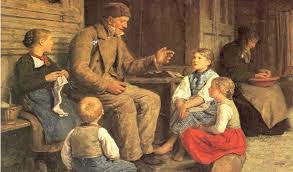
The next time you find yourself frustrated that someone won’t accept what seems like an obvious truth, ask yourself: What story are they living in? And how might I connect my facts to a story that resonates with their values and experiences? That may be what it takes to get them to hear what you’re really saying.

Can you give a personal example of when hearing a story changed your mind about something important? Have you noticed yourself rejecting facts that contradicted a narrative you already believed in? You’re invited to add your thoughts below.


Up Next:
Confirmation Bias: Why We Usually See What We Expect To See”


The story of the little girl, a baseball and what really sticks

A long while back, I heard some guy tell this story on the radio. I never really caught his name or the reason he was telling the story, but it left a lasting impression on me. So in the ancient tradition of storytelling (including a little artistic license for each subsequent teller), I’m passing it on to you.

I’ve always had a love for baseball. So when my daughter was born, as some parents are known to do, I looked forward to the time when I could share that passion with her and–just maybe–inspire the same in her. From the time that she was quite young, we would pass many a summer Sunday afternoon snuggled up on the couch together eating popcorn and watching baseball games on television. As she grew a bit older, we added the ritual of going out in the backyard to play catch after the TV game had ended. So it should be no surprise that I looked forward to taking her to see a live, big-league game someday.

As it so happened, a new minor-league baseball team came to our town when my daughter was about seven years old, so we made big plans to go to our first real baseball game together. When the day finally came, it turned out to be perfect weather: clear blue skies, 75 degrees and a gentle breeze. We had great seats on the third baseline. The field was a vibrant green and perfectly groomed. I eagerly pointed out the position each player was playing and together we cheered each hit, diving catch and homerun. We shared hot dogs and soda and peanuts. We sang along while the organist played “Take me out to the ballgame”. And to top it off, our team won.

As we headed across the parking lot to our car after the game was over, an elderly gentleman approached us with a baseball in his hand and turned to my daughter. “Excuse me,” he said, “but I caught this foul ball today and I come to these games all of the time, so I already have a few. Would you like to have it?” With wide eyes, my daughter gratefully accepted the ball and we both thanked the gentleman as he turned to go. It was the ending to a perfect day.

Years later, when my daughter was home from college, we were reminiscing about things we had done when she was a kid. I recalled my fond memory of that first baseball game we attended together and, out of curiosity, asked her what she remembered about it. She immediately responded with, “I remember that old guy that gave me the baseball!” Not the game itself, not the shiny new ballpark, not the players or the hot dogs or the organ music, but some random guy we bumped into in the parking lot.

Which made me think: sometimes the most meaningful things about the events we go to end up being experiences that weren’t necessarily on the program—it’s the personal interactions we have with other people who are attending the same event. Many times those exchanges lead to unforeseen learning, opportunities and lasting connections—all unexpected benefits of just being in close proximity with people who may start out as strangers, but they share a common interest with us.

It occurs to me that this is certainly an under-valued aspect of live events. And as experience designers, it’s worth giving some though to how we can build events that will facilitate those connections that lead to unpredictable but memorable conversations–to increase the chances that each attendee will take a few new “baseballs” home with them when they leave. What’s your favorite story about how you’ve seen this happen?


The Starfish Story: one step towards changing the world

You may have heard this one, but I find that it doesn’t hurt to be reminded of it every once in a while.  First let me tell you the story, and then we can talk about it. 

Once upon a time, there was an old man who used to go to the ocean to do his writing. He had a habit of walking on the beach every morning before he began his work. Early one morning, he was walking along the shore after a big storm had passed and found the vast beach littered with starfish as far as the eye could see, stretching in both directions. 

Off in the distance, the old man noticed a small boy approaching.  As the boy walked, he paused every so often and as he grew closer, the man could see that he was occasionally bending down to pick up an object and throw it into the sea.  The boy came closer still and the man called out, “Good morning!  May I ask what it is that you are doing?”

The young boy paused, looked up, and replied “Throwing starfish into the ocean. The tide has washed them up onto the beach and they can’t return to the sea by themselves,” the youth replied. “When the sun gets high, they will die, unless I throw them back into the water.”

The old man replied, “But there must be tens of thousands of starfish on this beach. I’m afraid you won’t really be able to make much of a difference.”

The boy bent down, picked up yet another starfish and threw it as far as he could into the ocean. Then he turned, smiled and said, “It made a difference to that one!”

adapted from The Star Thrower, by Loren Eiseley (1907 – 1977)

We all have the opportunity to help create positive change, but if you’re like me, you sometimes find yourself thinking, “I’m already really busy, and how much of a difference can I really make?”  I think this is especially true when we’re talking about addressing massive social problems like tackling world hunger or finding a cure for cancer, but it pops up all of the time in our everyday lives, as well. So when I catch myself thinking that way, it helps to remember this story.  You might not be able to change the entire world, but at least you can change a small part of it, for someone. 

They say that one of the most common reasons we procrastinate is because we see the challenge before us as overwhelming, and that a good way to counter that is to break the big challenge down into smaller pieces and then take those one at a time–like one starfish at a time.  And to that one starfish, it can make a world of difference.

“A single, ordinary person still can make a difference – and single, ordinary people are doing precisely that every day.”
Chris Bohjalian, Vermont-based author and speaker


Related Post:
Changing Course: How America Got Lost, and How We Can Find Our Way Back Together