Category Archives: > Building Bridges To Common Ground

The Invisible Lens: How Your Worldview Filters Everything You See

Episode 6 of the Building Bridges Series
3-minute read


Two people witness the same car accident. One sees reckless driving and demands stricter law enforcement. The other sees a tragic mistake and calls for better driver education. Same event, completely different conclusions.

Welcome to the power of worldview filters—the invisible lenses through which we see and interpret everything around us.

What Are Worldview Filters?

Think of your personal worldview as a pair of glasses you’ve been wearing so long that you’ve forgotten you have them on. These mental filters act as screens that determine:

  • Which information gets your attention
  • How you interpret what you see and hear
  • What you consider important or trivial
  • What seems obviously true or clearly false
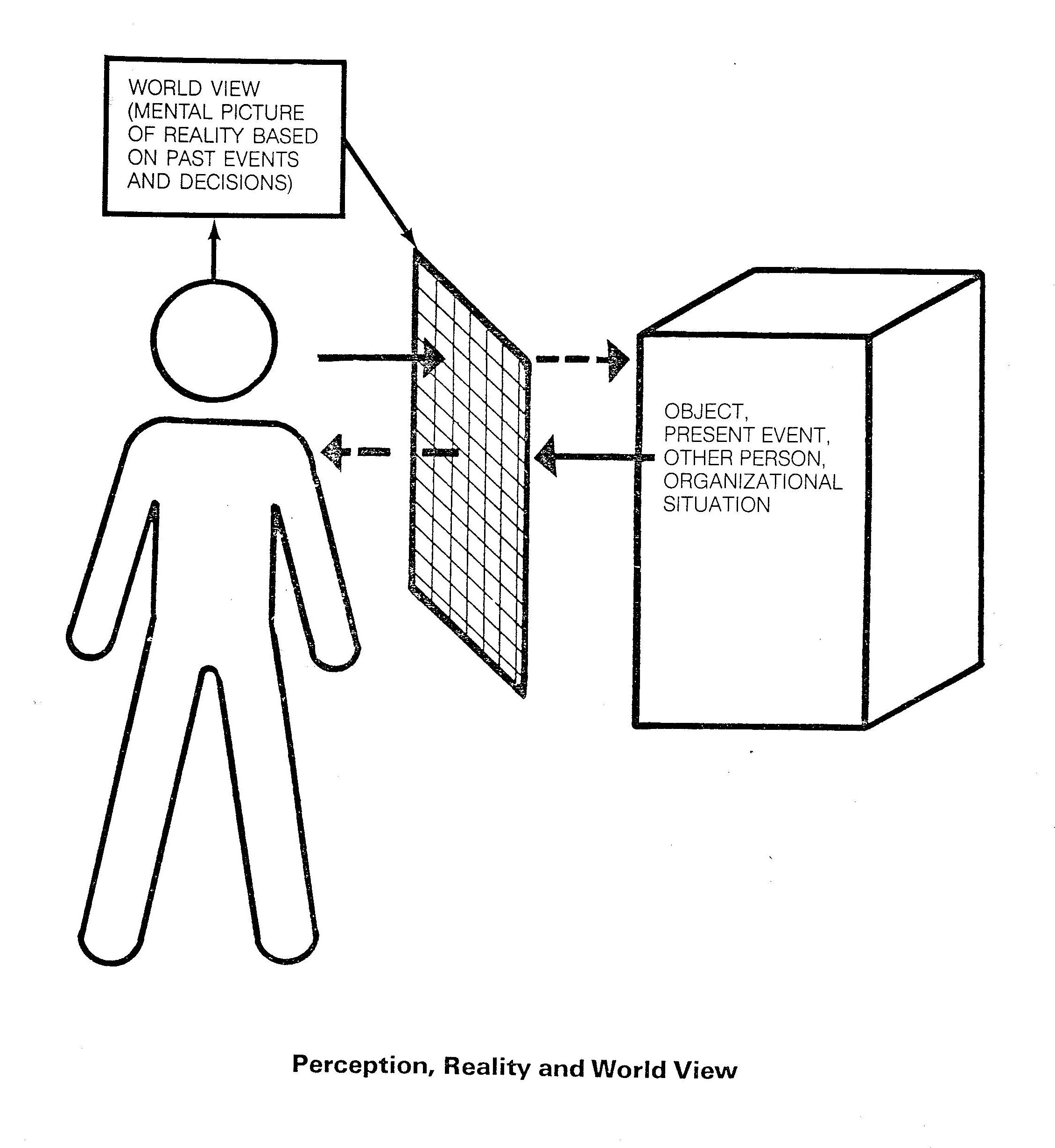
Your worldview isn’t just your opinion about specific topics—it’s the fundamental framework that shapes how you process all information and make sense of reality itself. As the diagram above shows, the same objective reality can pass through different people’s worldview filters and emerge as completely different perceptions—which explains why two people can witness the same event and come away with entirely different interpretations.

Where Do These Filters Come From?

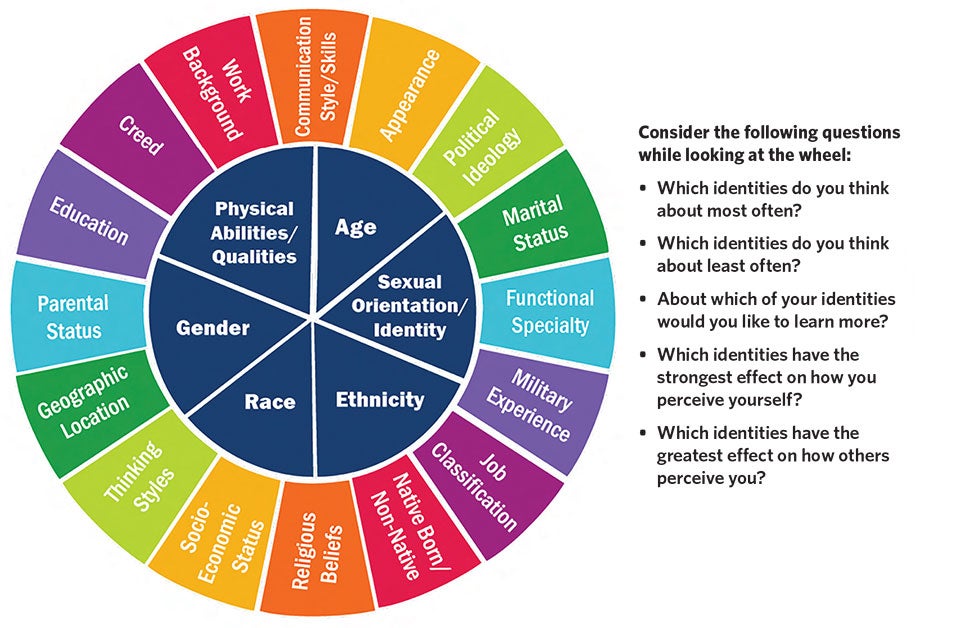
Our worldviews don’t form randomly. They’re built from the unique combination of experiences that make up our lives:

Life Events: Significant experiences shape our understanding of how the world works. A person who grew up during the Great Depression might have very different views about financial security than someone who came of age during the dot-com boom, when 22-year-olds were becoming millionaires overnight.

Cultural Environment: The stories, traditions, and values we absorb from our families and communities create deep patterns in our thinking, often operating below our conscious awareness. Religious and spiritual traditions are particularly influential, shaping our fundamental beliefs about human nature, morality, and life’s purpose in ways that affect how we interpret virtually every situation we encounter.

Social Circles and Information Sources: The people we spend time with and the media we consume reinforce certain ways of seeing the world while making others seem foreign or wrong. In our current information environment, algorithms for social media or search results often create echo chambers that reinforce our existing filters, rather than challenging them.
Source: https://pacasa.org/news/identity-wheel

These filters work hand-in-hand with our brain’s natural tendency toward confirmation bias. Our Lizard Brain, focused on quick survival responses, uses these filters to rapidly categorize new information as friend or foe, safe or dangerous—noticing information that supports our existing beliefs while dismissing contradictory evidence.

Why Understanding Worldview Filters Matters

Since none of us have had exactly the same combination of life experiences, we’re naturally going to end up seeing some things very differently. Recognizing worldview filters is crucial because everyone has them, but most people don’t realize it. We tend to think our way of seeing things is simply “how things are” rather than one possible perspective among many. These filters operate unconsciously and often lead to misunderstandings when people wearing different worldview glasses discuss the same topic—it’s almost like you’ve learned to speak different languages.

Seeing Your Own Lens

The goal isn’t to eliminate your worldview filters—that’s impossible. Instead, the aim is to become aware of them to help understand how they might be controlling your thinking.

Try asking yourself:

  • What major life experiences have shaped how I see the world?
  • When I have a strong emotional reaction to new information, what might that tell me about my filters?
  • How might someone with a completely different background interpret this same situation?

When you encounter someone who clearly sees the world differently than you do, try approaching them with genuine curiosity rather than judgment. Ask questions to help understand their perspective—not to prove them wrong, but to learn how their experiences shaped their worldview. This curiosity can lead to a much deeper understanding than arguing ever could. And that can make space for exchanging ideas.

The most profound conversations often happen when people recognize that they’re looking at the same reality through different lenses, rather than assuming one person is simply right and the other wrong. Next time you find yourself thinking “how can they not see the truth?”, remember: they might be wearing different worldview glasses than you are.

Which personal experiences do you think have most shaped your own worldview? Have you ever had a moment when you realized you were seeing something through a particular filter or bias? Are there some worldviews that are “right” and others that are “wrong”? Feel free to add your thoughts below.


Up Next: “Moral Foundations: Our Beliefs About How Things Are Supposed To Work”


6 Expectations to Abandon Before Your Next Difficult Conversation

Episode 5 of the Building Bridges Series
4-minute read


Have you ever been part of a conversation about a difficult topic—politics, religion, parenting approaches, etc.—and watched it quickly spiral into frustration or outright conflict? My guess is that your answer is a resounding yes.

What if I suggested that many of these conversations go sideways not because of what was said, but because of the expectations we had going into them?

The reality is, having a successful conversation where there’s likely to be disagreement (without it becoming stressful or heated) may require you to let go of certain common expectations before you even get started. I got this idea from my experiences with the Braver Angels organization, whose purpose is no less than to  restore the American spirit of working together.

Here are six expectations worth dropping before your next challenging conversation:

1. “I can change their mind.”

This might be the most damaging expectation of all. The truth is, we can’t force anyone to change their core beliefs. The only person you can reliably change is yourself.

When you enter a conversation determined to change someone’s mind, you’re setting yourself up for frustration. Instead, aim to understand their perspective better and perhaps plant seeds that might grow later.

2. “We can agree on the facts and have a logical discussion.”

It seems reasonable to expect that we can agree on basic facts and follow logical progressions. But human brains don’t always work that way.

We all process information through existing belief filters. What seems like an indisputable fact to you might represent a threat to someone else’s entire worldview. Their resistance isn’t necessarily about logic—it’s about preserving their own psychological coherence.

3. “I am right.”

This certainty feels good, but it creates a major barrier to genuine dialogue. The moment we become absolutely certain we’re right about something is often the moment we stop being able to learn anything new.

Try entering conversations with the humility to admit you might be missing something. As they say on the podcast “No Stupid Questions,” you have to commit to the possibility that you might be wrong. This other person may know or have experienced something that you hadn’t ever thought of before.

4. “There will be a winner and a loser.”

Many of us unconsciously approach difficult conversations like debate competitions, where one person will emerge victorious and the other defeated.

Real life isn’t a debate tournament. The most productive conversations often end not with victory but with better understanding. Sometimes we need to let go of the need to win for a while.

5. “We should end up agreeing with each other.”

Agreement is a high bar that often isn’t realistic. A better approach is to focus on understanding why someone sees things differently than you do.

You still might not agree at the end, but at least you’ll know why and so will they. This understanding builds bridges even when consensus isn’t possible.

6. “If I keep an open mind to new ideas, they will too.”

Being open-minded is like being in shape—not everyone exercises regularly. Some people may not be ready to question their assumptions or consider new perspectives, especially in a first conversation.

It’s best to meet people where they are, not where you wish they were. Their openness may grow over time, especially if they see you modeling the curiosity and respect you hope to receive from them.

A Different Approach

Instead of these expectations, try approaching difficult conversations with:

  • Curiosity about how someone else sees the world
  • A willingness to listen, not just talk
  • An assumption that this person may know something that you don’t
  • Respect for the other person’s humanity, even if you don’t agree with them
  • Patience with the process of building understanding

The goal isn’t to eliminate disagreement—that may sound nice, but we won’t ever get there. Instead, the goal can be to disagree better. By abandoning these six expectations, you create space for more productive exchanges, even if you’re talking about challenging topics. And if you can find at least some areas of common ground, that can be first step in finding ways to work together.


Up Next: “How Your Worldview Filters Everything You See”


The Power (and The Dark Side) of Tribes

Episode 4 of the Building Bridges Series
4-minute read


“People like us do things like this.”

I really like this simple, useful description of what a “culture” is, which I got from the author/teacher Seth Godin. It captures one of the most powerful forces shaping human behavior: our deep need for belonging.

We humans are fundamentally social creatures. Throughout our evolutionary history, being part of a group wasn’t just nice—it was necessary for survival. Those who belonged to strong tribes lived; those who were cast out often died. It’s no wonder that our brains developed powerful mechanisms to help us form, maintain, and defend our tribal connections.

Where You Can Find Tribes

When I say “tribes,” I’m not just talking about ancient clan structures. In today’s world, our tribes come in countless forms:

Tribal rivalries
  • Sports team fans
  • Political parties
  • Religious communities
  • Professional groups
  • Online communities
  • Brand loyalists
  • Issue Activists
  • Club members
  • Schools and colleges
  • Neighborhoods
  • Cultural or ethnic groups

Some tribes are formal, with clear membership boundaries. Others are informal, with unspoken rules about who belongs. But all tribes share something important: they give us a sense of belonging and become part of our self-identity.

How Tribal Identity Shapes Us

Our tribal memberships affect us in ways we often don’t realize:

  1. They tell us how to behave. Each tribe has norms—spoken or unspoken rules about “how we do things around here.” We follow these norms, often without questioning why.
  2. They shape what we believe. We tend to adopt the beliefs common in our tribes, sometimes before we’ve even examined the evidence ourselves.
  3. They influence who we trust. We naturally trust members of our tribes more than outsiders, even when there’s little rational basis for this difference.
  4. They affect how we process information. We’re more likely to accept information from tribal sources and reject information from outside, regardless of accuracy.

The fascinating (and sometimes troubling) thing about tribal identity is how quickly it forms. In lab experiments, researchers can create tribal loyalty by dividing people into groups based on something as meaningless as which color shirt they’re wearing. Within minutes, people start favoring their own group members. It’s essentially an automatic human behavior, which grew out of a need for safety and survival.

Our tribal identities supercharge our confirmation bias. When information challenges not just our individual beliefs but our tribe’s shared beliefs, our confirmation machines work overtime to protect both our personal worldview and our standing in the group. This is why it’s often easier to change someone’s mind on a neutral topic than on an issue that’s central to their tribal identity—their psychological defenses get ramped up.

This tribal dynamic can be reassuring and fun. It can be very useful for creating strong social bonds, teamwork and collaboration. It’s a big part of how we have built cities, nations, and entire cultures. But it is also how, sometimes, each one of those things has crumbled.

The Dark Side of Tribalism

When our tribal identity becomes too central to our self-concept, we start seeing the world in terms of “us” versus “them.” People outside our tribe become less human in our eyes, making it easier to dismiss, dislike, or even dehumanize them. (If you’re a baseball fan, imagine wearing a NY Yankees cap to a Red Sox game in Boston.) Tribal thinking can lead us to seeing everyone as either with us or against us: friends or enemies, heroes or villains.

We also become resistant to information that might threaten our tribal standing. Research shows that people with strong partisan identities will sometimes reject factual information if accepting it would put them at odds with their tribe—even if doing so goes against their own personal interests. That’s how powerful the need for belonging can be.

Breaking Free of Tribal Limits

The goal isn’t to abandon all tribal connections—they’re too fundamental to human experience. Instead, we can:

  1. Become aware of our tribal identities. Which groups do you feel like a part of, and how might that shape your worldview?
  2. Join multiple, overlapping tribes. Having diverse group memberships makes us less likely to over-identify with any single group.
  3. Recognize our shared humanity. Even as we acknowledge group differences, we can remember what connects us across tribal lines.

Next time you find yourself dismissing someone’s perspective, ask: “Is this my thinking brain at work, or my tribal identity protecting itself?”

If you’re interested in learning more about how Tribalism works (and sometimes doesn’t work), I highly recommend this article at The Conscious Vibe: This Is Why Tribalism Is A Social Problem

What “tribes” do you belong to? Can you think of an example of how your tribal identity has influenced how you see an issue, or how you view others who are not part of your tribe? Feel free to add your thoughts below.


Up Next: “6 Expectations to Abandon Before Your Next Difficult Conversation